
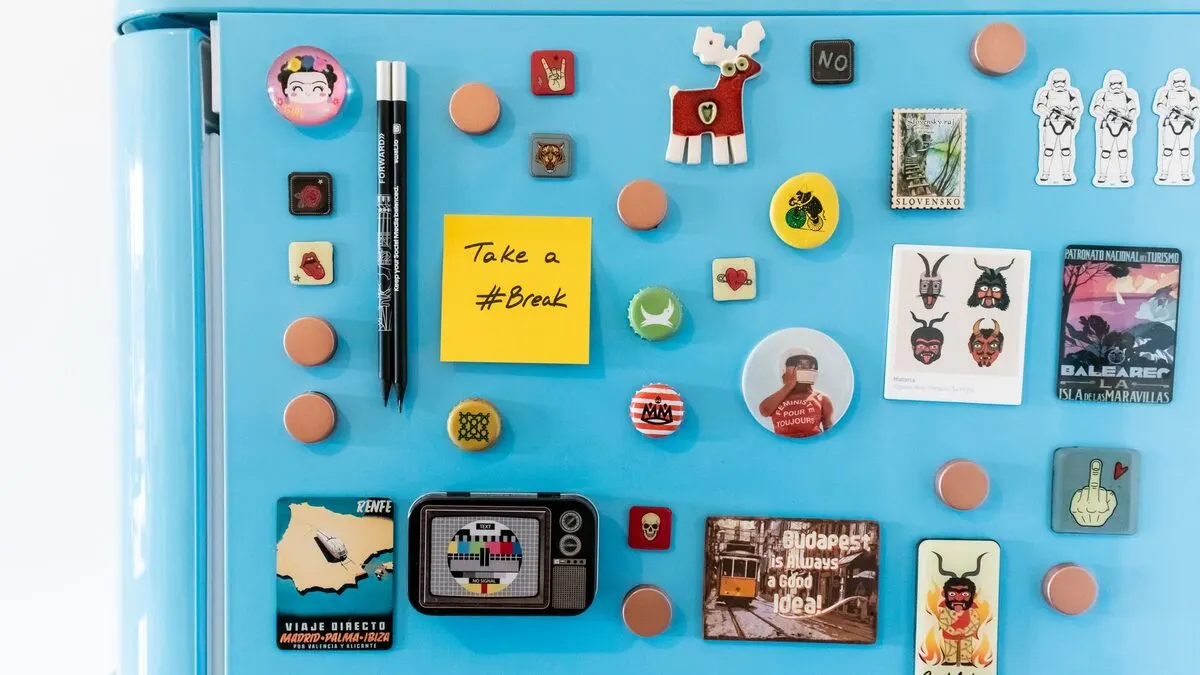
Custom souvenir magnets are refrigerator or display magnets printed or moulded with a specific design — a landmark, mascot, logo, or piece of original art — and sold as keepsakes, retail impulse buys, or branded giveaways. Unit cost at 500 pieces from a specialist manufacturer runs roughly USD 0.50–1.50 depending on production method, format, and quantity.
Key Takeaways
- Flat flexible-sheet, 3D epoxy dome, and UV hard-substrate are the three main production routes — each suits different artwork styles and retail price points.
- MOQ usually starts at 100–300 pieces; pricing shifts noticeably at 500 and again at 1,000+.
- Photographic artwork → flat laminated magnet; bold logo or mascot → dome magnet; craft or premium feel → hard substrate (wood, acrylic).
- Lead time from a Chinese OEM/ODM factory: 10–15 working days after artwork sign-off, plus shipping.
- Always request a physical sample before approving bulk production, regardless of supplier.
Who Buys Custom Souvenir Magnets
Museum gift shops, heritage sites, hotel chains, city souvenir retailers, event organisers, and brands running loyalty or seasonal campaigns all order custom souvenir magnets in volume. The common thread is that magnets deliver persistent, low-cost impressions: once someone sticks a magnet to their fridge, it stays there and gets seen multiple times a day without any further spend.
For souvenir retailers, magnets sit comfortably in the USD 3–8 impulse-buy range, customers often pick up two or three at once for family members, and the format is light enough to fit in a luggage bag without worry. That combination of accessibility and giftability makes magnets a reliable category — stock-outs cost more in lost sales than over-ordering costs in tied-up stock.
Hotels use branded magnets as quiet in-room keepsakes or functional items (a room-number reminder, a concierge number) that guests take home. Event organisers value them as a step above the printed lanyard — lightweight for postal fulfilment and durable enough to outlast the event by years. OEM/ODM buyers commission large runs under white-label terms for catalogue clients who want a product with regional or branded artwork.
If you are weighing whether magnets fit your current project, the custom merchandise overview covers the broader product categories we support.
Types of Custom Souvenir Magnets
The production method you choose affects the look, feel, shelf price, and unit economics of the finished product more than any other variable.
Flat printed magnets
The most common format: full-colour artwork is printed on paper or vinyl, laminated (gloss or matte), and bonded to a flexible ferrite magnetic sheet. This process handles photographic images — city panoramas, artworks, landscape photographs — with high colour fidelity and sharp fine detail.
MOQ is typically 100–200 pieces at most suppliers. At 500+ pieces, unit cost is the lowest of any magnet type. Laminate quality varies: if the magnets will be displayed in sunlit retail environments or handled frequently, ask specifically about UV and scratch resistance. According to Ideaman's custom souvenir magnet guide, standard retail-grade lamination handles normal indoor display well, but outdoor or marine applications should specify UV-stabilised laminate.
Flat magnets also suit fine-text applications — calendar magnets, business card magnets, maps — where legibility under a dome resin would degrade.
3D epoxy dome magnets
A printed base (produced the same way as a flat magnet) is flooded with clear two-part epoxy resin that self-levels into a raised, convex dome. The resin magnifies and deepens the image, adds a glassy premium feel, and makes colours appear more saturated at point of sale.
Retailers consistently report that dome magnets achieve USD 1–2 higher retail pricing per unit compared with a flat version of the same design. That premium is disproportionate to the small increase in production cost, making dome magnets a practical way to move up in average selling price without redesigning the artwork.
One trade-off: the dome subtly distorts very fine lines and small text. Bold designs, mascots, logos, and landscapes work best. For detailed maps or text-heavy artwork, flat is the safer choice.
Browse our character and thematic dome magnet collections — dinosaur characters, space characters, garden characters — to see how the format handles illustrated design work.
UV flatbed print on hard substrates
UV printers deposit and cure ink directly onto rigid or semi-rigid materials: acrylic, PVC board, hardwood, MDF, slate, or metal plate. The finish is hard, scratch-resistant, and can incorporate spot-gloss effects or textured surfaces.
Hard-substrate magnets feel handcrafted rather than mass-produced. Museums, design stores, and brands with a heritage or artisan identity often prefer this route because the material itself communicates quality — a wooden magnet with a UV-printed traditional motif reads differently from a flexible-sheet version of the same image.
Unit cost is higher than flexible-sheet magnets, but MOQ can be lower (some factories run as few as 50 pieces per design) because there are no plate-making costs. Our 3D and UV printing process page has more detail on how UV flatbed printing works in practice.
Design Considerations
A few variables that consistently affect how well a custom souvenir magnet sells, based on what souvenir buyers and retailers tell us.
Size: The most common retail souvenir sizes run from 50 × 75 mm to about 90 × 130 mm. Smaller magnets under 50 mm on the short side can get lost on a display stand. Larger magnets above 100 × 150 mm feel more substantial but the retail price needs to justify the step up in material cost. Standard rectangular sizes generally give the most competitive unit pricing.
Die cuts: A shape die-cut to a country outline, logo silhouette, or product mascot adds visual impact, but the steel-rule die incurs a tooling charge. Above about 1,000 pieces, the tooling fee becomes a small per-unit addition. Below 500 pieces, a centred design on a rectangle is usually the better budget decision — unless the shape itself is the selling point.
Artwork resolution: Supply vector files (.ai or outlined PDF) wherever possible. For photographic content, 300 dpi at final print dimensions is the minimum. VistaPrint's custom magnet product page notes that a large proportion of customer quality complaints trace back to insufficient artwork resolution rather than print quality — a pattern any experienced supplier will confirm.
Magnetic strength: Standard flexible ferrite sheet at 0.5 mm works for smooth refrigerator doors. For painted steel, powder-coated cabinets, or vehicle doors, 0.76 mm or 1 mm sheet holds more reliably. The cost difference is small; specify the end-use surface when you request a quote.
Pricing, MOQ, and Lead Time
There is no single price because the variables — method, substrate, size, finish, quantity, shape — interact. What is consistent across the market:
| Production method | Typical MOQ | Unit price guide (500 pcs) |
|---|---|---|
| Flat flexible sheet | 100–200 pcs | USD 0.40–0.80 |
| 3D epoxy dome | 100–300 pcs | USD 0.60–1.20 |
| UV hard substrate | 50–150 pcs | USD 1.00–2.50 |
Prices above are factory-gate guides; retail souvenir buyers typically apply a 2.5–4× markup to arrive at shelf price.
Lead time from a Chinese OEM/ODM factory is typically 10–15 working days after artwork approval. Rush production (5–7 working days) carries a 20–40% surcharge. For shipping: express air freight adds 3–5 days; sea freight adds 20–30 days and makes sense only for large volumes.
For accurate pricing on a specific project, contact us directly with your design, quantity, format preference, and destination — we can provide a quote and sample confirmation timeline.
For a deeper look at the business mechanics of ordering magnets in volume, see our companion article on custom fridge magnets for business.
FAQ
What is the difference between a souvenir magnet and a promotional magnet?
Souvenir magnets are designed to be purchased by end consumers as keepsakes — they typically feature a location, landmark, cultural motif, or character design. Promotional magnets are brand-driven items given away to build recall (a calendar magnet with a company logo, for example). The production methods overlap completely; the difference is in the intended customer and pricing model.
Can I order different designs in the same production run?
Yes, most suppliers offer multi-design runs where the MOQ applies per design, sometimes with a lower combined threshold for mixed runs. The more designs you split across, the less the per-unit economics improve with volume. It is worth asking your supplier how they handle mixed-design pricing before you commit to the split.
What is a realistic retail price for a custom souvenir magnet?
For flat laminated magnets, USD 3–5 is typical retail. For dome magnets, USD 4–8 is achievable. Hard-substrate and novelty formats can retail at USD 6–12 or above depending on material and perceived value. Margins depend heavily on order quantity and whether the design is exclusive to the buyer.
How do I get a sample before committing to bulk production?
Request a pre-production sample directly from your supplier. You typically cover the sample production cost and courier fee; many suppliers credit this against the first bulk order. Always approve a physical sample — not just a digital proof — before signing off on full production, particularly with a new manufacturer.
Do flexible ferrite magnets contain allergens?
The flexible ferrite sheet used in most souvenir magnets is a ceramic-rubber composite. It does not contain nickel. The printed surface (vinyl, laminate, or epoxy resin) is inert under normal handling. If a specific regulatory certification is required — for children's products, for example — specify this when requesting a quote, as material documentation can usually be arranged.