
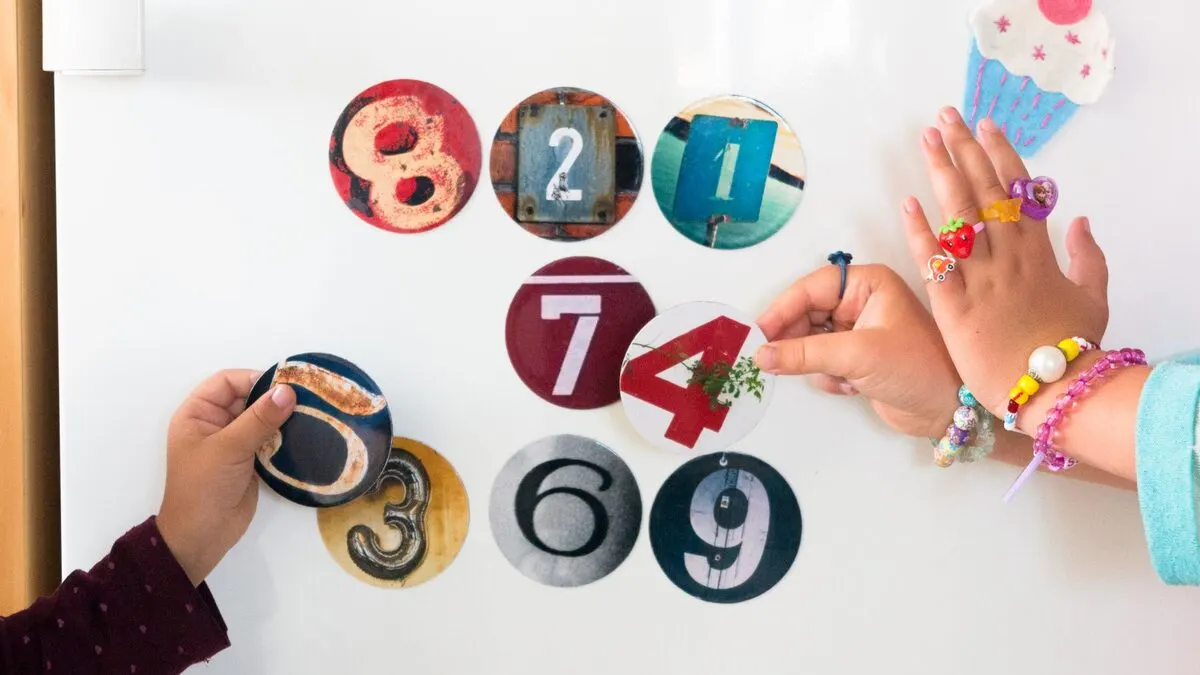
Custom fridge magnets for business are promotional items, retail souvenirs, or branded giveaways with your logo or artwork bonded to a magnetic backing. Standard MOQ starts at 100–300 pieces, unit cost drops noticeably from 500 pieces onward, and production typically takes 10–15 working days after artwork sign-off.
Key takeaways
- Three main production routes: offset/digital print on flexible sheet, 3D epoxy resin dome, and UV flatbed on rigid substrate.
- 500 pieces is roughly the point where unit economics shift from "fine" to "competitive."
- Always request a physical or photo proof before approving mass production.
- Flat magnets suit photographic artwork; dome magnets suit bold logos and mascots.
- Lead time from a Chinese factory: 10–15 working days production, plus shipping.
Why Businesses Keep Reordering Fridge Magnets
A fridge magnet lands on a surface people see multiple times a day. That passive, repeated visibility is why souvenir shops, museums, hotels, corporate marketers, and event organisers keep coming back to the format.
Souvenir retail is probably the strongest use case. Magnets sit in the USD 3–8 impulse-buy range, customers pick up several for family members at once, and sell-through is reliably high. Stock-outs cost more in lost sales than the savings from under-ordering.
Hotels and hospitality brands use branded magnets as quiet in-room touchpoints — a room service menu prompt, a loyalty programme reminder, or simply a branded keepsake that guests take home. The cost per impression over a guest's stay is essentially zero.
Corporate and event clients value magnets for being lightweight enough for postal campaigns and durable enough to outlast a paper flyer by years. A magnet on an office filing cabinet is a brand impression that renews itself every time the recipient opens a drawer.
The economics hold because magnets rarely get thrown away. Unlike leaflets or packaging, people attach them to something and leave them there.
Print Methods: Which One Fits Your Project?
The choice of production method affects look, feel, durability, and price more than any other decision. Here is a plain breakdown of the three routes.
Flat print on flexible magnetic sheet
A full-colour image is printed on paper or vinyl, laminated (gloss or matte), and bonded to flexible ferrite sheet. This is the industry standard for photographic magnets — city skylines, artworks, scenic destinations.
Colour fidelity is high, minimum orders tend to be low (100–200 pieces at most factories), and unit cost at 500+ pieces is very competitive. The surface is flat, which suits photographic content better than bold logo-only work. Lamination quality varies between suppliers — ask specifically about scratch resistance and UV resistance if the magnets will be displayed in sunlit retail environments.
Flat print on flexible sheet is also the most common format for business card magnets, calendar magnets, and anything where the design has fine text or photographic detail that needs to reproduce sharply.
3D epoxy resin dome magnets
A printed base (the same flat-print process above) is flooded with a clear two-part epoxy resin that self-levels into a raised, convex dome. The dome magnifies the image and adds a glassy, premium feel.
Retailers consistently find customers pay USD 1–2 more for a domed magnet compared to a flat version of the same image. For souvenir shops aiming to move up in price point, dome magnets are a reliable way to do it without changing the underlying artwork.
The resin needs to cure — typically 24–48 hours — which adds to lead time. Very fine line work and small text can appear slightly distorted under the dome, so this format works best with bold, simple designs: mascots, logos, broad landscapes. Browse current dome magnet styles in our collections.
UV flatbed print on hard substrates
UV printers deposit ink directly onto rigid or semi-rigid materials — acrylic, wood, PVC board, metal — and cure it instantly with ultraviolet light. The result is a hard magnet with fine detail, vibrant colour, and optional spot-gloss effects.
Unit cost is higher than flexible-sheet magnets, but the MOQ can be lower (some factories run as few as 50 pieces per design) because there are no plate or tooling costs. A wooden magnet with a UV-printed traditional motif feels handcrafted rather than mass-produced, which positions it differently on the shelf. Museums, design stores, and brands with a craft identity often prefer this route.
Sizes, Shapes, and Magnetic Strength
Standard sizes and die-cut options
Rectangular magnets in the 50 × 75 mm to 90 × 130 mm range cover most retail and promotional use cases. Suppliers such as UPrinting list around 20 standard size options for flat magnets, which gives a clear picture of the range the market supports.
Die-cut shapes — a country outline, a logo silhouette, an animal — require a steel-rule die or laser cutting and add cost. For orders above 1,000 pieces the tooling fee amortises into a small per-unit addition. Below 500 pieces, a rectangle with centred artwork is usually the smarter budget choice. Die-cut only makes sense if the shape itself is part of the product's appeal — a magnet shaped like a landmark or a product mascot, for example.
Magnetic strength
The flexible ferrite sheet used in most promotional magnets comes in thicknesses from 0.5 mm to 1.5 mm. For a smooth refrigerator door, 0.5 mm is adequate. For painted steel doors, powder-coated cabinets, or surfaces with a less-than-perfectly-smooth finish, 0.76 mm or above holds more reliably.
If the end user is sticking the magnet to something other than a domestic fridge — a vehicle door, a metal display stand, a trade show panel — discuss this with your supplier and ask them to test holding strength on a representative surface before production starts. The difference in cost between 0.5 mm and 0.76 mm sheet is small, and upgrading avoids customer complaints about magnets sliding.
Ordering: MOQ, Artwork, and Lead Time
Minimum order quantities
| Method | Typical MOQ |
|---|---|
| Flat print, flexible sheet | 100–200 pieces |
| 3D resin dome | 100–300 pieces |
| UV flatbed, hard substrate | 50–100 pieces |
Unit cost drops meaningfully at 500 pieces and again at 1,000+. For a single event or a first retail order, 200–300 pieces is usually viable. For ongoing stock replenishment, 500–1,000 per design makes the economics work well. According to VistaPrint's custom fridge magnet product page, even larger print-on-demand platforms gate their best pricing at higher quantities — which holds true across the industry.
Artwork requirements
Supply artwork as a vector file (Adobe Illustrator .ai or PDF with fonts outlined) or a high-resolution raster file (300 dpi at final print size, TIFF or PNG). For dome magnets, check whether the manufacturer wants CMYK or RGB source files — some UV and resin workflows are ICC-profiled differently.
Expect your supplier to send a digital proof and, ideally, a physical sample before mass production. If they do not offer a proof step, treat that as a risk signal. A physical sample costs a little more but is strongly worth it on a first order with any new supplier.
Lead times and shipping
Standard production from a Chinese OEM/ODM factory: 10–15 working days after artwork approval. Rush production (5–7 working days) typically attracts a 20–40% surcharge. Shipping options:
- Express air freight: 3–5 days transit, higher cost per kilogram, practical for samples and urgent orders.
- Standard air freight: 7–14 days, moderate cost, suitable for most repeat orders.
- Sea freight: 20–30 days, most economical for large volumes (1,000+ pieces with bulk packaging).
For worldwide buyers placing a first order, express air freight is worth the premium even if the unit economics push toward sea freight for reorders. You verify quality, confirm that the artwork translates correctly to the finished product, and have time to reorder before stock runs out.
To discuss current lead times, production capacity, and sample availability, visit our studio page or get in touch directly.
FAQ
What is the minimum order quantity for custom fridge magnets for business?
MOQ is typically 100–300 pieces, varying by print method. Flat flexible-sheet magnets tend to have the lowest MOQ. Hard-substrate UV magnets can run in smaller batches (50 pieces in some cases) because there are no plate costs. Very small runs under 50 pieces are possible with certain digital-print suppliers but cost per unit rises steeply.
How long does production and delivery take from a Chinese factory?
Plan for 10–15 working days of production after artwork approval, plus shipping time. Express air freight adds 3–5 days; sea freight adds 20–30 days. A realistic door-to-door timeline for a first air-freight order is 3–4 weeks from artwork submission to delivery.
What artwork format should I supply?
Vector files (Adobe Illustrator .ai or outlined PDF) are the clearest option. For photographic artwork, supply a 300 dpi TIFF or PNG at the final print dimensions. Avoid low-resolution JPEGs — they print soft at magnet size and the result is difficult to correct after production starts.
Is a sample available before I commit to a bulk order?
Yes. Most OEM/ODM factories produce samples on request; you cover the sample cost and courier fee. Some suppliers credit the sample cost against the first full order. Always request at minimum a photo proof of the finished sample before approving mass production.
What is the difference between a flat magnet and a dome magnet?
A flat magnet is printed on flexible magnetic sheet and sealed with lamination. A dome magnet has the same printed base covered with a clear epoxy resin that cures into a raised, glass-like surface. Dome magnets look and feel more premium; retailers find they command USD 1–2 more per piece. Flat magnets reproduce photographic detail more faithfully; dome magnets suit bold graphics and logo-centric designs.